Tuesday, March 2, 2010

All About Vitamin A

Vitamin A was first discovered back in 1912, by a Polish biochemist named Casimir Funk. He came up with the word vitamine, which was later given the name vitamin. Funk was the first to discover vitamins as we know them today, although vitamin A was actually the first one discovered, hence the letter “A” in the title of the vitamin.

You can find vitamin A in natural foods such as oranges and yellow fruits. It can also be found in vegetables as well, such as spinach and fats. When found in vegetables, vitamin A is water soluble, coming in the form of beta carotene. The beta carotene form of vitamin A can be eliminated from your body through natural processes, making it an excellent way to get vitamin A.

Vitamin A is required by the body on an every day basis to maintain healthy skin and keep your eyesight on track. There are many people who say that carrots provide enough vitamin A to prevent you from getting night blindness. The fact is, ancient Egyptian doctors prescribed liver in their time, which they said contained enough vitamin A to combat night blindness. Vitamin A is also known as an antioxidant, which makes it ideal to prevent cancer and anti aging. Along with these benefits, it also helps with your immune system as well.

To get the proper absorption of vitamin A, you’ll need to consume fat. Those of you who happen to be on a low fat or restricted diet, simply may not be getting the right amounts of vitamin A from your supplements that you may think. To get the proper absorption of vitamin A in your diet, you’ll need to consume a high enough level of protein. Protein combines with vitamin A to make it stronger, and help it move through your body.

On a normal day, you should be consuming around 5,000 international units (IU) of vitamin A. Depending on your health and your age, you may need to consume more or less. The safest form of vitamin A is beta carotene as mentioned above, and it can be taken in much larger doses. No matter what age you may be, you can feel safe to consume high amounts of vitamin A in the form of beta carotene.

If you don’t consume enough vitamin A in your diet, you’ll end up with a deficiency. A deficiency is never a good thing, as it normally results in skin problems, increased infections, and even night blindness as well. A prolonged deficiency in vitamin A can put you at a risk for cancer as well, and you’ll also miss out on any effects of anti aging that the vitamin might have. Although you should begin taking it immediately if you have a deficiency, the effects wouldn’t be the same as they would be if you stayed up to date with the right amount on a daily basis.

On the other hand, if you are getting too much vitamin A, you’ll put yourself at risk for pain in your joints, abdomen, and your bones. Even though too much or not enough can cause you serious side effects, you should always get the right amount in your diet. Vitamin A is very important, and should always be included in your diet. You can find it in many foods, or take supplements that include the well needed vitamin. If you are going to take supplements, you should make sure that they provide the right amounts - with no side effects.


Bee Pollen Supplements

Even though a lot of people don’t actually realize it, a lot of antioxidant foods that we consume are from vegetables. Vegetables such as broccoli, cauliflower, tomatoes, and peppers are all excellent choices with some great benefits for your body. When consuming vegetables, you should always go for those that are rich in color, as they are high in what is known as phytonutrients.

Phytonutrients are nutrients found in the skins of several fruits and vegetables, which give the food color as well as flavor and scent. Phytonutrients are quite simply the best types of antioxidant foods that you can find anywhere. If you are looking for a supplement value, the coq10 offers you a high level of antioxidant value.

Although fruits and vegetables are the best sources for antioxidants, the problem with them is that they are produced by the use of chemical herbicides, pesticides, and different types of fertilizers. Over the years, studies have shown that fruits and vegetables which are organically grown are high in antioxidants, and boast a much higher concentration than those that have been produced commercially.

In the busy world of today, it can be very tough to eat like we should, nor can we eat organic fruits and vegetables all the time. If you can’t or don’t have access to organic fruits or other sources of antioxidant foods, you should look into nutritional supplements that offer you the phytonutrients you need in your diet.

Supplements that contain phytonutrients do have advantages when compared to certain fruits, such as carrots - which can elevate your blood sugar level to a very high level. Phytonutrients found in supplements are the extract of pigments where nutrients are concentrated, meaning that they draw the best from antioxidant foods, leaving the calories and sugar behind.

Don’t get the wrong idea here, fruits and vegetables are indeed good for you. They are high in antioxidants, although those that are produced commercially generally come with chemicals and such that aren’t so good for you. Canned fruits and vegetables come with high levels of sugars and calories, which antioxidant supplements don’t have. The supplements offer you the levels you need, without any chemicals, sugars, or calories. This way, you don’t have to worry about consuming anything that isn’t good for you.

No matter how you look at it, healthy eating for your body starts and end with foods that contain antioxidants. There are several types of foods that contain antioxidants, although fruits and vegetables contain the most amounts. Steak and meat are also great sources of antioxidants, along with other great benefits, such as protein. Anytime you can’t get foods that contain antioxidants - you can count on supplements to deliver the amount you need to stay healthy.

Monday, February 22, 2010

Designer on Focus: Alessandro Benetton

To outsider eyes, Ponzano, Italy, is a nondescript little burg about 20 minutes outside of Venice, but snake your way through its outer byways and you’ll run into more important contemporary architecture than you’d ever imagine possible in a town of 12,000 people. What did Greater Ponzano do to deserve this? It has the good fortune to be the headquarters of the Benetton family.

Founded by four siblings (Luciano, Giuliana, Gilberto, and Carlo) in 1965, Benetton made its name peddling happy-colored knitwear. Fast fashion is old hat to us now, but when Benetton did it, it was revolutionary. The company went on to help set the trendy-preppy dress code of the early ’80s and pioneer confrontational, socially conscious advertising, some of which didn’t even show the company’s products. (Conceiving of a brand as a worldview rather than a label to be slapped on a T-shirt was another cultural trend Benetton prefigured.) So while Benetton’s clothing—attractive, current, European, democratically priced— has never been at the avant-garde of fashion, the aesthetic aura that surrounds the family and the company certainly has. Those campaigns famed creative director Oliviero Toscani dreamed up in the ’80s and ’90s? In addition to scenes of engagé multicultural bliss were uncompromising portraits of people with AIDS, a nun and a priest midsmooch, and inmates on death row. Add to this radical marketing strategy the company’s important buildings designed by such luminaries as Tadao Ando and Tobia Scarpa; innovative factories; the ambitious publishing and image-making lab, Fabrica: and Colors magazine, and Benetton’s heritage rises far above that cute rugby shirt that everyone had to have a quarter century ago. In 2005, the direction of the 2-billion-euro company, which has grown to include substantial real estate holdings and four sports teams (volleyball, basketball, rugby, and Formula One), was handed down from Luciano Benetton to his then-41-year-old son Alessandro. And Luciano’s progressive outlook is in no danger of fading away. All-new architectural projects, an African microcredit program, global design and architecture contests, and a local children’s school, Ponzano Children, are just a few of the stews recently boiling on the Benetton stove. Ambitious, sure. But why shouldn’t rugby shirts and $200 suits pave the path to utopia?

alessandro benetton
“It’s true—these projects are not all directly related to selling T-shirts,” says Alessandro Benetton when I go to Ponzano to poke around. Yet many of them make good business sense, even if they have a do-gooder foundation. Take, for example, the microcredit program Africa Works, started in 2008 with the Senegalese singer Youssou N’Dour. “It’s not that we want to be just charitable,” says Benetton firmly. “Africa is a continent that’s growing 5 percent a year.” Benetton is already selling there—the company has 6,000 stores in 120 countries, more than a dozen in Africa. If Africans’ standard of living rises, they might have enough disposable income to buy some new sportswear. In fact, one of Benetton’s strongest initiatives in the past decade has been its growing retail presence in emerging markets such as India, Eastern Europe, and Iran. As the company has grown, the clothes have kept up with the times. They’re gently au courant without being trendy, with the same wit and color sense as ever.

Benetton is also proud of what it’s doing at home. Theirs was one of the first factories in rural Italy to have air-conditioning. In 2007, Benetton opened Ponzano Children, a day care center and preschool, in partnership with the local government. The school is set up for kids ages nine months to six years; half are employees’ children and half are town kids. Housed in a white, skylit cube ringed in by an ovoid outdoor play space and gardens, the 2.3-acre compound was designed by the award-winning architect Alberto Campo Baeza. In the various play spaces, among the hand-me-down dressup clothes (many with Benetton logos) and toys typical of any nursery school, are modular chairs by Play+. There is a space dedicated to “nothingness.” The large common play area is filled with intenselooking, large-scale photographs of happy children.

As for Alessandro Benetton, who is tall, tanned, soft-spoken, and almost impossibly good-looking, his home shares the same utopian spirit as his company. To build his family place, which he shares with his wife, the Olympic Italian gold-medal skiier Deborah Compagnoni, and their three children (Agnese, 9, Tobias, 7, and Luce, 3), he hired Tadao Ando, a starchitect known for clean, almost strict temples to light. (This was Ando’s second commission for the family; a third is on the way.) The finished product, called “The Invisible House” for the way it’s set into a depression in the landscape that hides it from public view, is nearly 11,000 square feet of concrete rectangles that are as comfortable inside as they are Spartan on the outside. Benetton’s taste in furnishings runs toward high Italian design, but the sunken living room, with enormous plate glass windows and soft polished powdered marble walls, is a study in tasteful flopping. Two giant couches and a chic version of a beanbag dominate the hearth and TV areas. Family photos are on most surfaces, and the guest room is riddled with Compagnoni’s trophies and antique silver cups. There was once an adjoining room just for shoes; still, Alessandro has more pairs than his wife. The eldest two children share a bedroom. (The kids were playing in the garage with a neighbor when I arrived. Tobias had made a television set out of a cardboard box that he was wearing on his head.) In the garage gym, there are about 10 Nautilus machines, but there is no home office. “I thought it was a good idea not to bring work home,” Benetton says in a pleasant northern Italian accent. He tells me he and Compagnoni don’t do a lot of socializing. Even if I weren’t as well-known a homebody as Benetton, I wouldn’t want to leave the place either.

Ando, who carved his initials into Benetton’s dining room table when the house was finally furnished in 2004, also built Fabrica, which is just a 20-minute drive away. The company’s independently functioning product, design, and communications lab was the brainchild of Luciano Benetton, who founded it in 1994. It includes a one-year school of 40 to 50 international students apprenticing in all manner of packaging and design; a conference facility; a branding agency (with clients other than Benetton); a film production hive; and a research library. The student body—multicultural, intermittently pierced, and almost all smokers, as far as I could tell— is straight out of Colors, the quarterly magazine formed in 1991 by Oliviero Toscani, Tibor Kalman, and Luciano. Still in circulation today, and still tackling the same issues of identity, conflict, and creativity around the world, Colors now produces books with the same wry wit and attention to detail. Probably Fabrica’s most acclaimed nonprinted work includes the dark comedy No Man’s Land, about the war in the Balkans, which won the Best Foreign Language Film Oscar in 2002. And Benetton sponsors such competitions as Designing in Teheran, which has just awarded the architects Grzegorz Witold Woronowicz and Yana Radera commissions to build retail and office spaces in the Iranian capital. Fabrica’s building has the same Ando hallmarks that the Invisible House does: angular concrete, reflecting pools, clean surfaces, and enormous amounts of natural light. “It is important for a company with a global vision to create a strong architecture, one with clear concepts and ideals,” Ando says. Benetton has never made much of a secret of its concepts and ideals, and Ando’s work is a perfect fit. The look is as elegant as it is earnest. Granted, these buildings bear a much higher price than a poppy scarf or a pair of attractively cut $75 pants. But the vision’s the thing.

Thanks to Elle.com

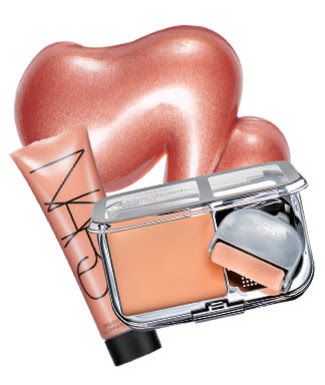
New Make Up United from Loreal Paris and Nars

loreal paris l'oreal nars
The best just got even better by both L’Oréal Paris and Nars debut new versions of top-sellers this month: Loreal True Match Roller Perfecting Roll On Makeup delivers its perfect formula with a pint-size paint-roller, and Nars—a brand that sells two Orgasm products in the U.S. every minute—gives women a fuller flush with its Orgasm Illuminator, a sheer liquid glow for the face.

Friday, February 19, 2010

Lacoste Fall 2010 Collection in New York Fashion Week

Lacoste Fall 2010 Collection in New York Fashion Week


Lacoste Fall 2010 Collection in New York Fashion WeekLacoste Fall 2010 Collection in New York Fashion WeekLacoste Fall 2010 Collection in New York Fashion WeekLacoste Fall 2010 Collection in New York Fashion WeekLacoste Fall 2010 Collection in New York Fashion WeekLacoste Fall 2010 Collection in New York Fashion WeekLacoste Fall 2010 Collection in New York Fashion WeekLacoste Fall 2010 Collection in New York Fashion WeekLacoste Fall 2010 Collection in New York Fashion WeekLacoste Fall 2010 Collection in New York Fashion WeekLacoste Fall 2010 Collection in New York Fashion WeekLacoste Fall 2010 Collection in New York Fashion WeekLacoste Fall 2010 Collection in New York Fashion WeekLacoste Fall 2010 Collection in New York Fashion Week

Calvin Klein Men's Fall 2010 in New York Fashion Week

Calvin Klein's men's fall 2010 collection is sleek and modern in the New York Fashion Week 2010. Whether or not the clothes are actually wearable is a different story.


new york fashion week fall 2010 men calvin kleinnew york fashion week fall 2010 men calvin kleinnew york fashion week fall 2010 men calvin kleinnew york fashion week fall 2010 men calvin kleinnew york fashion week fall 2010 men calvin kleinnew york fashion week fall 2010 men calvin kleinnew york fashion week fall 2010 men calvin kleinnew york fashion week fall 2010 men calvin kleinnew york fashion week fall 2010 men calvin kleinnew york fashion week fall 2010 men calvin kleinnew york fashion week fall 2010 men calvin kleinnew york fashion week fall 2010 men calvin kleinnew york fashion week fall 2010 men calvin kleinnew york fashion week fall 2010 men calvin kleinnew york fashion week fall 2010 men calvin klein

Wednesday, February 17, 2010

The Importance of Working Your Core Muscle

Suppose that at a distance you see a short, stooped figure walking with short, slow steps. Most likely, you will conclude that the person is old. The hunched posture gives you the clue.

Why does aging contort so many bodies in this way? The reason is that many people, throughout their lives, never extend the neck to its full range, and so the muscles shorten. Long hours of reading, sewing, typing, or standing at a workbench take their toll. Eventually deposits of calcium salts in the joints complete the process of immobilization. Once this calcification takes place, nothing can be done to reverse it.

Fortunately, older persons can take action before it is too late. The best action is regular exercise that stretches the muscles and improves flexibility, with special considerations on the core muscles. This kind of response is relatively important for a number of factors that when taken for granted will only lead to serious health problems.

What Are Core Muscles?

Core muscles pertain to the muscles found at the obliques, abdominals, lower back, and the glutes. These four areas of the body are the ones that usually frame the posture of a person. Hence, a good posture reflects the good condition of these muscle areas.

What people do not know is that core muscles are actually the “core” or the central part for all the strength that is needed to boost carry out different physical activities. This only means that if an individual’s core muscle is physically powerful, it will maintain equilibrium on the body and will stabilize the system every time the person is working out and moving.

Strengthening Core Muscles

The main responsibility of the core muscles is to provide enough power to the body in order to enable it to cope up with the dynamic challenges of every physical activity that a person encounters.

For this reason, many health and fitness experts have realized that it is relatively important to strengthen the core muscles than with the other muscles in the body. Through some series of experiments and research, they have found out that having a stronger core can lessen a lot of health problems concerning posture.

For instance, a well-conditioned core muscle can project good posture. It can also improve the endurance of the back all the way through the day.

Why? Because muscles that are included in the group of core muscles are actually the ones that initiate the proper stabilization of the whole upper and lower torso.

So, for those who wish to know and understand why it is important strengthen the core muscles, here is a list of some of the benefits that you can use as references:

1. Strengthening core muscles will improve posture and prevent low back pain of the muscular origin.

This means that as you incorporate stretching exercises in your routine, taking a particular focus on the muscles of the upper and front part of the trunk, including the abdominal and trunk muscles, the activity has the tendency to strengthen the muscles of the back that extend to the spine.

2. It will help tone the muscles, thereby, avoiding further back injury

Exercising your core muscles will strengthen and tones your lower back muscles and buttocks while stretching the hip flexors and the muscles on the front of the thighs.

Achieving this state will deter you from any serious lower back injury.

3. Improves physical performance

Exercising the core muscles with slow, static stretching is just as effective in relieving stiffness and enhances flexibility. Once the flexibility of a person has improved, it follows that he will be able to perform his physical activities at a better state.

4. They do not cause sore aching muscles

Static stretching for core muscles is best for the muscles and connective tissues. And because it employs slow stretches only, it will not cause any soreness, as do the quick, bouncing exercises that rely on jerky muscle contraction.

5. Lengthen muscles and avoid unbalanced footing as you get old

Core muscle exercises lengthen the muscles that have contracted as a result of pain. It also prevents pain from vigorous exercise if they are included at the end of each workout.

Health and fitness experts highly recommend starting core work out immediately and repeating the routine at least 2 times a week. The process can be done after the workout or even during the activity, for about 10 to 20 minutes only.

Indeed, core muscles are absolutely important in determining the good posture of the body. Strengthening them can absolutely eliminate those nuisances of back pains.